Midea 1.6 Cu Ft Mini Fridge Review: Worth It? (October 2026)
The Midea 1.6 cu ft mini fridge suits drinks, snacks and a few chilled food containers in tight spaces. Choose the taller freezerless model for regular grocery storage or the separate-freezer model for frozen meals.
On this page (9 sections)
- What does the Midea 1.6 cu ft mini fridge offer?
- How much room does it need?
- Is the chiller box a freezer?
- Midea mini fridge alternatives for groceries and frozen meals
- How does the BLACK+DECKER compare?
- How should you set up and load the fridge?
- What care does a small Midea fridge need?
- Which buying mistakes should you avoid?
- Which Midea mini fridge should you choose?
The Midea 1.6 cu ft mini fridge is a good fit for drinks, snacks and a few chilled food containers when space is tight. Choose a taller refrigerator if you need regular grocery storage, or a separate freezer if frozen meals are part of your routine.
Its main strength is its short cabinet, which gives you placement options where a taller compact fridge won't fit. The tradeoff is limited shelf space, so buy around the food you actually store rather than the word “mini.”
What does the Midea 1.6 cu ft mini fridge offer?
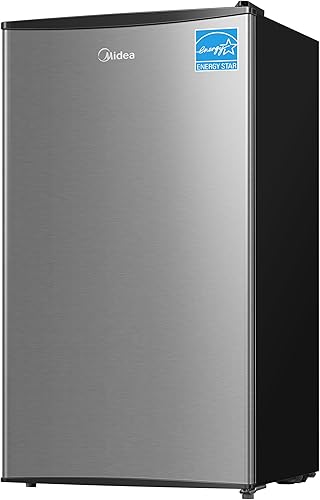
This Midea mini fridge offers small-scale chilled storage with a removable glass shelf, a door rack for a 2 L bottle and an internal chiller box. It works best as extra cold storage near where you study, work or relax.
Midea 1.6 Cu Ft Mini Fridge

- 1.6 cu ft capacity
- 18.6 x 17.7 x 19.4 in
- Reversible door
- Removable glass shelf
- Internal chiller box
Choose this short Midea for drinks, snacks and small food containers beside a desk or in a compact room. The removable shelf helps with bulky items, but grocery storage is limited.
Pros
- Low cabinet height
- Reversible door for flexible placement
- Removable glass shelf
- Door rack holds a 2 L bottle
Cons
- Limited room for groceries
- Manual defrost
- Dedicated freezer is a better fit for frozen meals
Think of it as a place for tomorrow's lunch, a few drinks and small snacks. If your plan includes several meal containers, produce and multiple large bottles at once, a taller refrigerator gives you more useful room.
The shelf lets you separate food from drinks, but removing it creates one taller storage area for bulky containers. That flexibility helps with an occasional large item; it doesn't make the fridge a good choice for a full grocery run.
Midea gives the mechanical thermostat a range of 28.4°F to 35.6°F. Because that range extends below freezing, use a refrigerator thermometer and keep delicate produce away from the coldest area.
Midea identifies this model as ENERGY STAR certified, with annual energy use of 207 kWh. Compare efficiency using annual consumption rather than appliance size alone; the ENERGY STAR refrigerator guide explains the certification.
Who should choose this Midea mini fridge?
Choose it for one person's modest daily supplies, especially when a low cabinet matters more than storage volume. It makes sense beside a home-office desk or as extra kitchen storage for items that otherwise crowd the main fridge.
Skip it as a shared household refrigerator or your only space for a weekly grocery shop. Also choose something else if your routine depends on frozen meals, ice cream or bulk food storage.
Before ordering, set out the containers you'd normally put inside. A wide lunch box can use much of a small shelf even when its volume seems modest.
How much room does it need?
Allow for the cabinet, ventilation and door swing, rather than measuring only the empty gap. The Midea 1.6 measures 18.6 in wide, 17.7 in deep and 19.4 in high.
Use the manual's clearance requirements when checking a spot beneath a desk or beside a cabinet. This is a freestanding refrigerator, so a tight enclosure needs more thought than simply matching the cabinet dimensions.
Measure along the delivery route, including narrow doorways and turns. At the final spot, check that the open door won't hit your chair, block a walkway or prevent you from removing the shelf.
The reversible door helps when a wall or desk leg sits on one side. Choose the opening direction before filling the refrigerator, and follow the manual if you change the hinges.
Put it on a firm, level surface with an accessible outlet and room around its vents. Avoid a spot beside a heater or in direct sun, where extra heat makes refrigeration harder.
Our mini fridge size guide explains how footprint and usable storage differ. For a wider view of refrigerator types, start with the mini fridge guide.
Is the chiller box a freezer?
Choose a dedicated freezer compartment for food that needs to stay frozen. The Midea 1.6 has an internal chiller box, which Midea says can cool drinks faster, but that isn't enough reason to rely on it for frozen meals.
A cold compartment can chill food without maintaining the conditions needed for long-term frozen storage. Don't buy this model expecting its small internal box to replace a separate freezer.
Decide what you'll store before choosing a cabinet size. If you mainly need drinks and lunch containers, refrigerator space matters most; if you regularly buy frozen food, give that need its own compartment.
Compare our mini fridges with freezers if frozen storage is essential. Among the alternatives below, the Midea 3.1 is the model to consider for that job.
Midea mini fridge alternatives for groceries and frozen meals
Choose the 3.3 cu ft Midea for chilled groceries or the 3.1 cu ft Midea for mixed fresh and frozen food. Their taller cabinets solve different storage problems, so total capacity alone shouldn't decide the purchase.
Midea 3.3: for lunches, drinks and fresh groceries
Midea 3.3 Cu Ft Low-Noise Mini Fridge
- 3.3 cu ft fresh-food capacity
- 18.6 x 17.7 x 33.9 in
- Interior LED light
- Reversible door
- Cans rack
A taller choice for lunch containers, drinks and fresh groceries when frozen storage isn't needed. It uses the same cabinet width and depth as the smaller Midea.
Pros
- More room for chilled food
- Interior LED light
- Separate can and bottle storage
- Reversible door
Cons
- Needs more vertical clearance
- No freezer compartment
- Manual defrost
The Midea 3.3 gives you 3.3 cu ft of fresh-food storage without a freezer taking up part of the interior. It's the stronger choice for office lunches, drinks and groceries that all need refrigerator space.
Its width and depth match the smaller Midea, while its height rises to 33.9 in. If floor space is limited but the area above the fridge is open, moving upward is a useful way to gain storage.
An interior LED light helps you see containers at the back, and the can rack keeps drinks separate from shelf space. The bottle rack also gives a large drink its own place instead of forcing it onto a shelf.
The thermostat spans 33.8°F to 50°F, so the warmest settings aren't suitable for perishable food. Set it for what you're storing and confirm the temperature with a thermometer.
Skip this model if frozen meals are part of your weekly shop or the fridge must fit below a low desk. Choose it when keeping all the available cold space for fresh food is the priority.
Midea 3.1: for a small fresh-and-frozen food supply
Midea 3.1 Cu Ft Mini Fridge with Freezer

- 3.1 cu ft total capacity
- 0.92 cu ft freezer
- 18.5 x 19.4 x 33 in
- Removable glass shelves
- Crisper drawer
Choose this Midea for a mix of fresh groceries and frozen meals. Its separate freezer takes part of the total capacity, leaving less refrigerator space than the freezerless model.
Pros
- Separate freezer compartment
- Crisper drawer for produce
- Removable glass shelves
- Interior LED light
Cons
- Deeper than the smaller Midea
- Manual defrost
- Less chilled-food space than the 3.3 cu ft model
The Midea 3.1 divides its space into a 0.92 cu ft freezer and 2.16 cu ft refrigerator. That makes it a better fit for a dorm or small apartment where one appliance needs to hold both chilled ingredients and frozen meals.
Its cabinet measures 18.5 in wide, 19.4 in deep and 33 in high. Check the extra depth carefully if it will sit beside shallow furniture or near a walking route.
Removable glass shelves help you arrange containers, while a crisper drawer gives produce a separate spot. These features suit someone who keeps a small food supply rather than mainly cans and bottles.
The key tradeoff is refrigerator space: the freezer takes part of the total capacity. Skip it if you never buy frozen food, since the freezerless Midea gives you more room for chilled groceries.
Also compare the dimensions of your usual frozen-food packages with the available compartment space. A separate freezer is useful, but a compact one still requires you to plan around bulky boxes and bags.
How does the BLACK+DECKER compare?
The BLACK+DECKER is worth considering when cabinet width is your main limit. It is narrower than the Midea 1.6, but it needs more depth and slightly more height.
BLACK+DECKER 1.7 Cu Ft Compact Refrigerator, Black
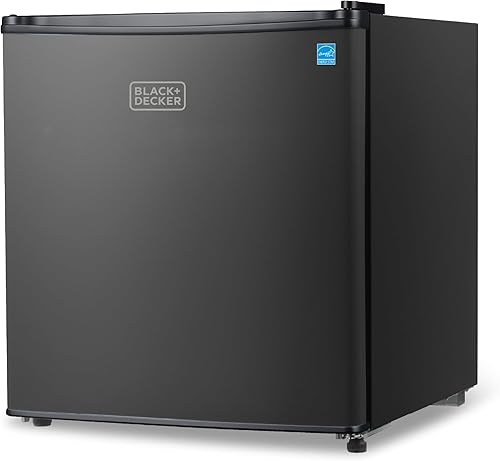
- 1.7 cu ft capacity
- 17.5 x 18.5 x 19.7 in
- Removable glass shelf
- Reversible door
- Adjustable leveling legs
A narrower alternative for a desk area where width matters more than depth. Its small capacity suits drinks and snacks, and the chiller isn't intended for frozen-food storage.
Pros
- Narrower cabinet than the Midea 1.6
- Reversible door
- Removable glass shelf
- Adjustable leveling legs
Cons
- Chiller compartment is not a freezer
- Manual defrost
- Needs more depth than the Midea 1.6
Its cabinet measures 17.5 in wide, 18.5 in deep and 19.7 in high. That shape may suit a narrow desk area better, provided the deeper body and open door leave enough room.
The removable glass shelf and reversible door offer similar storage and placement choices to the small Midea. Adjustable leveling legs help you get the cabinet sitting evenly on a firm surface.
Choose it for a few drinks, snacks and food containers when its shape fits your room better. The small capacity difference isn't a strong reason to switch if the Midea already fits your space.
BLACK+DECKER states that its chiller compartment isn't a freezer and shouldn't hold food that needs to remain frozen. Skip this model for frozen-food storage or if your main need is substantially more grocery room.
How should you set up and load the fridge?
Start with correct placement and a checked temperature before adding food. A crowded or poorly placed mini fridge can be less useful than its capacity suggests.
After delivery, follow the manual's instructions for standing time before plugging it in, especially if it traveled tilted or on its side. Clean the interior, dry it and let the refrigerator cool before loading perishable food.
Use a refrigerator thermometer rather than reading the control dial as a temperature. Check again after changing the setting or adding a large amount of food, and give the cabinet time to settle between adjustments.
Arrange food so cold air can move around it. Keep containers clear of vents and leave enough room that you can find lunch without unloading half the shelf.
Use the door rack for bottles and other items that fit securely. Keep foods that need a steady temperature on an interior shelf, since the door warms more often as it opens.
Store food in covered containers and use trays beneath anything that could leak. In a small refrigerator, one spill can reach several neighboring items, so keeping raw ingredients separate matters.
Don't use the coldest setting as a cure for every problem. If drinks are warm, first check that the door closes fully, the vents are clear and the fridge isn't packed too tightly.
What care does a small Midea fridge need?
Keep the interior clean, door seal clear and frost under control. All four models here use manual defrost, so occasional maintenance is part of the choice.
Wipe up spills as they happen, including sticky drips in the bottle rack. Check the door seal for crumbs or residue that could stop it from sitting flat against the cabinet.
Follow the manual for cleaning and defrosting, and protect nearby flooring before melting accumulated ice. Never chip ice away with a knife or another sharp tool, which can damage the refrigerator.
Move food to suitable cold storage before a longer cleaning or defrost session. Don't leave perishables on a desk while waiting for the fridge to return to its usual temperature.
Our mini fridge cleaning guide covers routine care. Use the mini fridge defrost guide when frost needs removing.
Which buying mistakes should you avoid?
The biggest mistake is choosing by total capacity without checking how that space is divided. A refrigerator with a freezer can hold less fresh food than a freezerless model with a similar total volume.
- Buying for an empty gap: include ventilation clearance, the plug and the open door in your measurements.
- Planning around occasional items: choose for your usual lunch boxes, bottles and groceries rather than one unusually large container.
- Treating a chiller as a freezer: select a separate freezer when frozen-food storage is part of the job.
- Expecting silent operation: Midea specifies below 42 dB for the small model, but a compressor can still be noticeable near a bed.
- Assuming a room mention means garage-ready: check the manual's allowed room-temperature range before placing a refrigerator in an unheated or very hot space.
For a bedroom, put the fridge where compressor sound and door access will cause the least disruption. Our bedroom mini fridge guide covers those placement choices.
Which Midea mini fridge should you choose?
Buy the Midea 1.6 for a small daily supply, the 3.3 for chilled groceries, or the 3.1 for fresh and frozen meals. Choose the BLACK+DECKER when its narrower cabinet solves a specific fit problem.
The small Midea earns its place when a taller fridge would crowd the room and your food supply stays modest. Move up in size if you'd otherwise need to shuffle containers every time you reach for a drink.
For a Midea mini fridge, decide the freezer question first, then check the cabinet fit and your normal food load. If you're still comparing brands, read our Midea vs Frigidaire mini fridge guide next.
Frequently asked questions
Does the Midea 1.6 cu ft mini fridge have a freezer?
It has an internal chiller box, so choose a dedicated freezer for food that must stay frozen. The Midea 3.1 cu ft alternative has a separate freezer compartment and is the better match for frozen meals, while the smaller model suits drinks, snacks and modest chilled-food storage.
How big is the Midea 1.6 cu ft mini fridge?
The cabinet measures 18.6 in wide, 17.7 in deep and 19.4 in high. Those dimensions don't include the extra space needed for ventilation or an open door, so measure your intended spot and follow the manual's clearance requirements before placing it beside furniture or beneath a desk.
Can the Midea 1.6 cu ft mini fridge door be reversed?
Yes, its door can open from either the left or right side. Choose the hinge side that lets you reach the shelf and door rack without blocking a walkway, then follow the manual's reversing steps and check that the door closes evenly against its seal.
Is the Midea 1.6 cu ft mini fridge quiet?
Midea specifies a noise level below 42 dB, but the compressor can still be audible in a quiet room. Keep the cabinet level and clear of furniture that could vibrate, and compare our quiet mini fridge options if you're choosing a fridge for a sleeping area.


