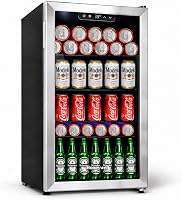
Best Mini Fridges: A Size, Freezer and Brand Guide
The best mini fridge depends on what you need to store and where it will sit. Compare usable capacity, freezer limits, outside dimensions, door swing and approved operating conditions before you choose.
On this page (7 sections)
- How do you choose the best mini fridge for your space?
- Do you need a mini fridge with a freezer?
- Which mini fridge features matter most?
- Which mini fridge suits a bedroom, office or dorm?
- Can a mini fridge go in a garage or basement?
- How much electricity does a mini fridge use?
- Which mini fridge should you choose?
The best mini fridge depends on what you’ll store, how much room you have and whether you need a freezer. Measure the spot, compare fresh-food and freezer capacity, and check door swing and operating conditions before you buy.
A compact model can hold drinks and a few snacks, while a larger cabinet may suit meal ingredients or shared use. The capacity number alone won’t tell you whether tall bottles fit or whether the freezer suits your plans.
Use this guide to narrow down size and type, then compare the 4 models below. For a closer look at measurements, see our mini fridge size guide.
How do you choose the best mini fridge for your space?
Start with the items you’ll store at the same time and the space available for the fridge. Then compare cabinet dimensions, interior layout, freezer limits and door orientation.
Measure the width, depth and height of the spot, including room for ventilation and the door to open. Check the route into the room too, especially if you need to move the fridge through narrow doorways or around corners.
Count bulky items such as 2-liter bottles, meal containers and taller cans. Shelves, door bins and a chiller compartment affect how easily those items fit.
| Your main need | What to compare |
|---|---|
| Drinks and small snacks | Fresh-food capacity, bottle storage and shelf layout |
| Frozen food or ice | Freezer capacity, temperature limits and approved uses |
| A tight spot | Outside dimensions, required clearance and door swing |
| A shared room | Capacity, noise information and access for everyone |
| A garage or basement | Approved operating temperature range for that location |
A larger fridge may give you more storage, but it also takes up more floor space. Choose for the food you regularly keep, rather than buying extra capacity for an uncertain future need.
What mini fridge dimensions should you measure?
Measure the available space and access route, then compare both with the fridge’s outside dimensions. The cabinet must fit through the route and leave the required clearance once it’s in place.
Measure the narrowest doorway, hallway or turn on the way to the final spot. Include door handles and trim in your measurements, and follow the fridge’s transport instructions.
After placement, allow room for the door to swing and for drawers or shelves to come out. A reversible door can help with layout, but it doesn’t make the cabinet itself narrower.
Which capacity fits your routine?
Pick a capacity by matching it to your usual food load and the number of people who will use it. These options range from a small personal fridge to a roomier compact refrigerator.
Capacity figures help compare models, but cabinet shape and shelf placement matter too. Compare the dimensions and storage layout if you have a particular bottle, container or meal tray to fit.
Do you need a mini fridge with a freezer?
Choose a freezer compartment only if its temperature limits suit what you plan to store. If you mainly chill drinks and fresh food, a model without a freezer may leave more room for the refrigerator section.
Freezer compartments vary in size and design. The Upstreman has a 0.3 cu ft compartment, the Igloo has 0.2 cu ft, and the Frigidaire has an internal compartment described as a chiller.
Upstreman says its compartment is not suitable for ice cream or ice cubes. Midea also describes its small compartment as a chiller, so don’t treat the word “freezer” alone as proof that a model suits every frozen item.
Check the available space and temperature limits against what you plan to store. For a closer comparison, see our best mini fridges with freezer guide.
If frozen food is only an occasional need, consider whether a compartment is worth giving up some refrigerator space. Compare the alternatives in our guide to best mini fridges without a freezer.
What’s the difference between a freezer compartment and a separate freezer?
An internal compartment sits inside the refrigerator cabinet, while a separate freezer has its own storage space and access. Temperature capability matters more than the name when choosing either type for frozen food.
A chiller compartment should not be treated as a substitute for a freezer without confirmation of its operating temperature. Check that the model supports your intended use before storing frozen meals, ice cream or ice.
Which mini fridge features matter most?
Prioritize door swing, shelf flexibility and temperature controls when they solve a specific fit or storage problem. The most useful features depend on your room and what you store.
- Reversible door: Lets you choose which way the door opens. The Upstreman, Midea and Frigidaire have reversible doors.
- Shelf flexibility: Helps make room for taller or irregular items. The Upstreman has 2 adjustable glass shelves, while the Midea has 1 removable glass shelf.
- Door storage: Keeps frequently used bottles and smaller items within reach. Midea has a 2-liter bottle rack, while Frigidaire has a 2-liter door basket and a can dispenser.
- Temperature control: Lets you adjust cooling, but a numbered setting does not confirm the actual food storage temperature. Use a fridge thermometer to check it.
- Defrost type: Manual defrost requires you to manage ice buildup. The Upstreman, Midea and Frigidaire use manual defrost, while the Igloo has automatic defrost.
- Leveling feet: Help steady the unit on an uneven floor. The Upstreman and Frigidaire have adjustable feet or legs.
A reversible door matters when a wall limits access from one side. Removable or adjustable shelves matter more if you often store tall bottles or containers that need extra height.
Which mini fridge suits a bedroom, office or dorm?
Choose by the room’s available space, your storage needs and the fridge’s sound information. A bedroom may call for a smaller cabinet, while a shared office or dorm may need more shelves and bottle space.
Midea states a noise level below 42 dB for its 1.6 cu ft model, which also has a reversible door. Upstreman states 38 dB for its 3.2 cu ft model, with 2 adjustable glass shelves and a reversible door.
For a larger shared load, the Igloo and Frigidaire offer 3.2 and 4.5 cu ft respectively. Compare their dimensions with the room and leave enough access to open the door fully.
Think about how close the fridge will sit to your bed or desk. Noise figures help with comparison, but they don’t promise that you won’t hear the compressor in a quiet room.
For a focused set of bedroom options, see our best mini fridges for the bedroom guide. If you’re choosing a work space, our best mini fridges for the office guide covers that use.
Can a mini fridge go in a garage or basement?
Use a mini fridge in a garage or basement only if the manufacturer approves the ambient temperature range for that location. A room that gets very hot or cold can fall outside a fridge’s operating conditions.
Check the manual’s operating limits before placing any of these models in an unheated or hot space. A general reference to garage use does not tell you which temperatures a fridge can handle.
A basement can also vary in temperature and humidity. Keep the fridge on a stable, level surface, follow its clearance requirements and avoid placing it where water could reach the electrical connection.
For more on placement, read whether a mini fridge can go in a garage and our guide to garage-ready refrigerators.
How much electricity does a mini fridge use?
Compare annual energy consumption in kilowatt-hours for the models you’re considering. Upstreman’s stated figure is 206 kWh per year, Midea’s is 207 kWh per year, and Igloo’s is 304 kWh per year.
These numbers are model-specific and don’t predict your exact electricity bill. Your rate, room temperature, placement and use affect the running cost.
Check the Frigidaire’s EnergyGuide label before comparing its annual use with these models. Its energy consumption figure needs confirmation before it can support a useful cost estimate.
To estimate cost, multiply annual kilowatt-hours by your electricity rate per kWh, then divide by 12 for a rough monthly figure. See how much electricity a mini fridge uses for more detail.
Which mini fridge should you choose?
Choose the Upstreman if you want 3.2 cu ft with adjustable glass shelves and a reversible door, but don’t need its compartment for ice cream or ice cubes. The Igloo offers the same total capacity, with 3 cu ft for fresh food and a 0.2 cu ft freezer compartment.
Choose the Midea if a 1.6 cu ft cabinet fits your smaller storage need better. Pick the Frigidaire if you need the most capacity here, at 4.5 cu ft, plus a 2-liter door basket and can dispenser.
The best mini fridge for you must fit both your room and your regular food load. If your fridge starts struggling to cool after setup, see why a mini fridge may not be cooling.
Frequently asked questions
What size mini fridge should I get?
Choose capacity for the food and drinks you’ll keep at once, then check the outside dimensions against your space. A 1.6 cu ft model suits a smaller load, while 3.2 to 4.5 cu ft offers more room, though shelf layout affects what fits.
Is a mini fridge with a freezer worth it?
A freezer compartment is worth having if it supports the frozen items you need to store. Check its temperature limits as well as capacity, since a small compartment may not suit ice cream or ice cubes, and freezer space reduces the room available for fresh food.
Can a mini fridge go in a bedroom?
A mini fridge can fit a bedroom if its dimensions, door swing and sound suit the room. Check the stated noise level and required ventilation clearance, then consider how close it will sit to your bed and whether you need frozen storage or just chilled drinks.
Can I keep a mini fridge in a garage?
Use a mini fridge in a garage only if its maker approves the temperatures your garage reaches. Garages can become much hotter or colder than living spaces, so check the manual’s operating limits before placing a fridge in an unheated room or a spot that gets hot.
How much electricity does a mini fridge use?
Annual energy use varies by model, so compare kilowatt-hours per year rather than relying on capacity alone. Your electricity rate, room temperature and use affect the running cost, and our mini fridge electricity guide explains how to turn an annual energy figure into a monthly estimate.